
How to Prepare Your Body for Ski Season
5 Offseason Training Tips
There’s a saying that skiing is easy to learn but hard to master. For a long time, I didn’t understand what that meant. You just stand on the skis and go downhill fast, right? Turns out, I had no idea how wrong I was.
2025–2026 Preseason
I spent my entire offseason training like an athlete, training my body, quite frankly, like it never has before. I was never a jock in school. I was in color guard for my district’s marching band, mostly because my school put exactly $0 into its music programs. For a school that offered plenty of sports opportunities, I had absolutely no interest in any of them. At one point, I even tried to start an archery club, only for it to be taken over by men who “knew how to run a club better.” By the time I gave that up, it was time to graduate and move on.
Four-ish years and one pandemic later, I graduated college and moved back to the cities, across the street from Buck Hill. where I found skiing. At 23 years old, I found something that kept me active, happy, and chasing that ever-sought-after dopamine hit. It just happened to be a mildly extreme sport.
Skiing for Bums
Skiing requires more than an average walk a day if you want to improve, and, at its core, if you want to stay safe. You can read more about that realization in First Tracks, but what I’m trying to say here is simple: I was a chronic couch potato.
Even during my first two seasons of skiing, I truly believed the best training for skiing was just skiing. It wasn’t until my third season, filled with bumps, bruises, and unnecessary aches, that I realized a ski season could be much more enjoyable than that.
Previous Season’s Lessons
The 2024–2025 ski season brought a lot of firsts: my first trip to Mount Bohemia, my first ski demo day, my first trip out West, and my first time finishing my skijoring course in competition. The list goes on. I really leaned into my passion last year.
I learned about different places to ski, different types of skis, boots, and gear, but more importantly, I learned how to treat my body. Not just how to position myself over my skis on the hill, but how to keep my body moving off the mountain. I learned how to fuel myself for better days on snow and how to build my body during the offseason.
By the end of that season, I was excited, borderline impatient, to apply everything I’d learned. I set long-term goals for the next season and got to work retraining my body to be less couch potato and more average Joe.
Offseason Training
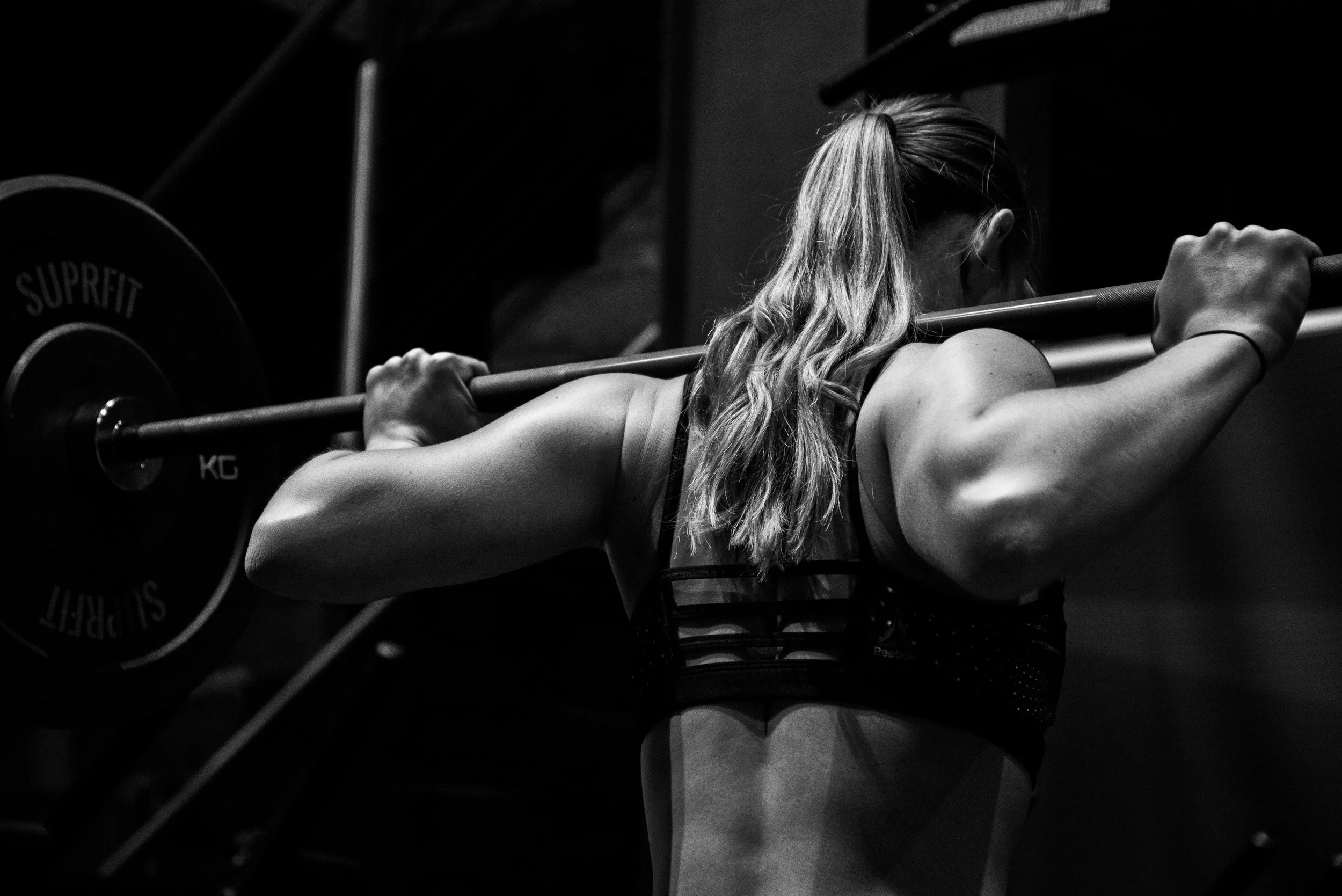
Strength training became the foundation of my offseason. I was waking up at 5 a.m., hitting heavy lifts, and heading out for a long walk to cool down, all before starting my 9–5 as a digital marketer. Every day included mobility work and stretching for injury prevention. Once (sometimes twice) a week, I took an adult “flips and tricks” class at Gleason’s Gymnastics to work on balance and air awareness.
I had no idea how much that would help me in other areas, too, like building confidence in my overall ability as a human to do cool shit.
5 things to do Offseason to be a better Skier
I also started the offseason incredibly skinny, and I’ll spare you the details. I did the research to build a diet that could actually support the activity level I’d taken on. I ate five to six meals a day, doubled my caloric and protein intake, and damn, my body changed. Getting stronger over the summer built muscle, confidence, and a whole lot of impatience for winter to arrive.
So, here are five things I changed this offseason to become a better skier.
1 - Strength Training
Resistance training, unilateral work, and core-focused lifts all play a role in keeping you upright on the hill. Want a stronger pop off side hits? You need leg strength to help you get airborne.
I started at the good ol’ Google machine, searching for “basic weightlifting movements” just to get myself moving. You don’t need a perfect program—you just need to start building strength consistently.
2 - Mobility Training
It’s easy to see someone doing mobility work at the gym and assume they’re just stretching or training the “boring stuff” that won’t matter. You’d be wrong.
Sit down. Do the yoga. Try plyometrics. Stretch your muscles. Move your body into weird positions. Because your skis will never ask permission to twist your leg the wrong way—they just will. And when that happens, you’ll be a lot happier if you’re mobile enough to walk away from it.
3 - Bulking for the Season
You don’t need to do a traditional bodybuilder bulk, and maybe you don’t need to bulk at all, but I used the offseason to build better nutrition habits and put on some muscle for the season.
My daily targets were around 90 grams of protein, 2,300 calories, a gallon of water, and enough fiber to keep everything moving. I started by finding a professional with a similar body type and goals and used their meals as inspiration.
4 - Dryland Training
Every winter athlete complains about dryland training, and for good reason. We prefer the cold, and so does our equipment. Forcing skis to do things on artificial turf sounded worse than mobility work. What do you mean I have no momentum going into this pop? And if I fall, it’s hard grass, not snow?
Still, dryland training made my pop higher, my balance stronger, and taught my body new ways to get into basic positions without having to lap the hill over and over.
5 - Take a Class
Get outside your comfort zone. If you have goals that feel out of reach, it’s probably because you’re not taking steps toward them.
Want a 360 or bigger air? Time to work on air awareness. Want to take that cliff drop and ride it out? You’d better get comfortable landing and balancing. I started by identifying my biggest goal, reaching out to a friend who had already achieved it, and actually taking their advice.
Classes help you return to a beginner mindset, and remind you how fun learning can be.
Ready for Opening Day
Preseason training doesn’t have to be perfect or extreme, it just has to be intentional. A little strength, mobility, fuel, and curiosity go a long way toward making ski season safer, stronger, and a hell of a lot more fun.
